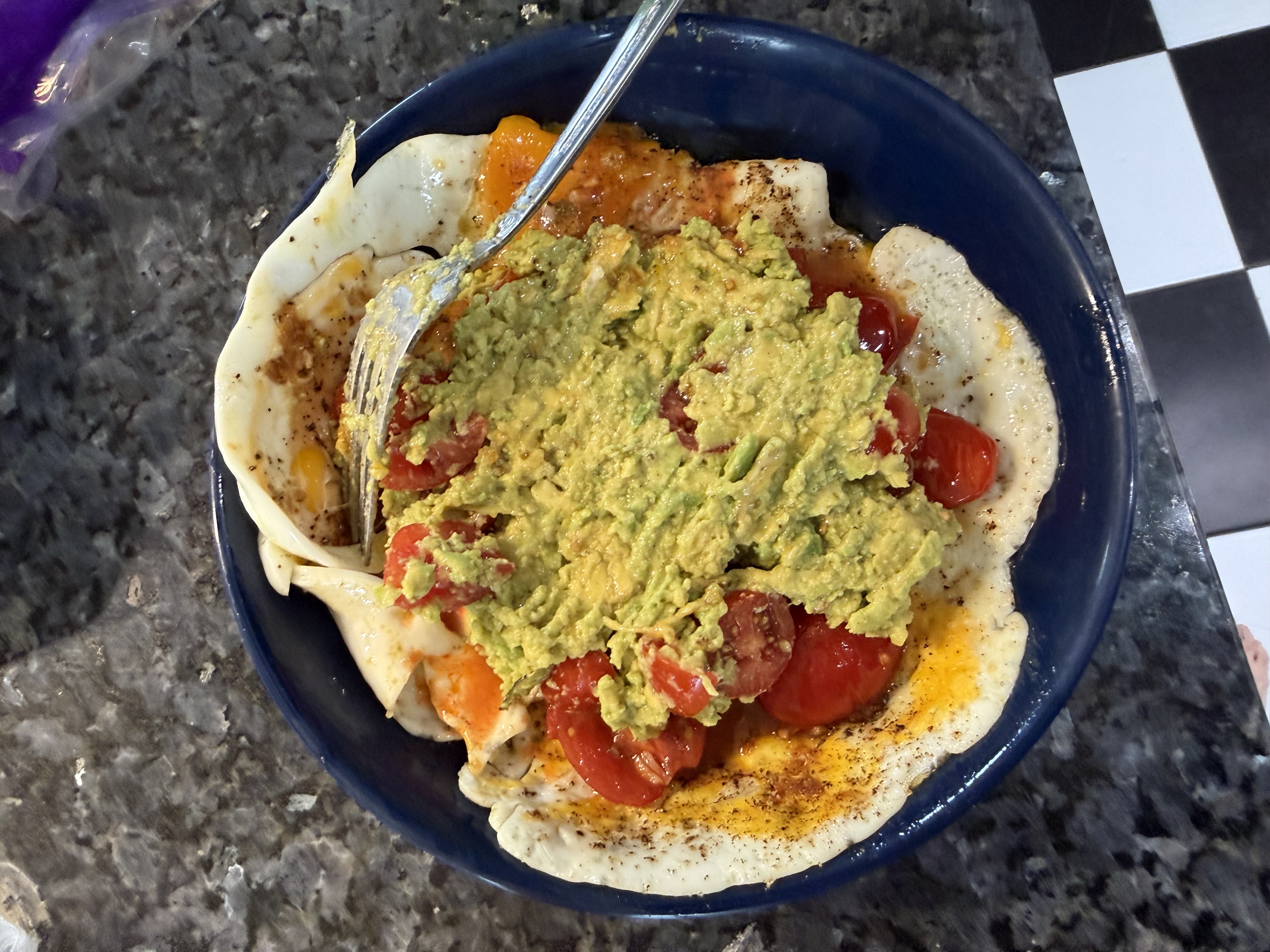
Our son is in a very positive phase of eating healthy and treated us with a nutritious omelette today. The recipe was simple and the execution was hard to get wrong. End to end, took him 10 minutes. It was a delight, fast to prepare and satisfying!
📋 Avocado Tomato Omelette with Olive Oil (Fluffy & Healthy)
⏱ Prep: 5min🔥 Cook: 5min⏰ Total: 10min🍽 Serves: 1
Ingredients
3 large eggs
1 tablespoon extra virgin olive oil
1 tablespoon water or whole milk
1/4 teaspoon fine sea salt
1/8 teaspoon freshly ground black pepper
1/2 medium ripe avocado, peeled and sliced
6 to 8 (about 1/3 cup) cherry tomatoes, halved
2 tablespoons crumbled feta cheese (optional but highly recommended)
1 tablespoon fresh chives or flat-leaf parsley, finely chopped
1 small pinch flaky sea salt (such as Maldon)
1/8 teaspoon red pepper flakes (optional)
1 teaspoon fresh lemon juice
Instructions
PREP YOUR FILLING: Slice your avocado half into thin, even pieces and squeeze the teaspoon of lemon juice over the slices — this keeps them bright green and adds a lovely pop of flavor. Halve the cherry tomatoes and pat them gently dry with a paper towel. (Dry tomatoes = no watery omelette!) Set everything within arm's reach of the stove before you start cooking, because omelettes wait for no one.
WHISK THE EGGS: Crack the 3 eggs into a small bowl. Add the tablespoon of water (or milk), the 1/4 teaspoon salt, and the black pepper. Whisk vigorously with a fork for a full 30 seconds — you want the mixture to look pale, slightly foamy, and completely uniform. No streaks of white remaining. This aeration is what gives you a fluffy, tender omelette rather than a rubbery one.
HEAT THE PAN: Place an 8-inch (20 cm) non-stick skillet over medium heat. Add the tablespoon of extra virgin olive oil and let it heat for about 60 seconds. You'll know it's ready when the oil shimmers and a tiny drop of egg sizzles immediately on contact — but it should NOT be smoking. Proper temperature is everything here: too cool and the eggs stick and steam; too hot and they brown and toughen before you can fold.
COOK THE OMELETTE: Pour in the whisked eggs all at once. Immediately tilt the pan to spread the egg mixture evenly across the surface. Let it cook undisturbed for 30 seconds until the edges just begin to set. Then, using a flexible silicone spatula, gently push the cooked edges toward the center while tilting the pan to let the uncooked egg flow to the edges. Repeat this motion around the pan 3 to 4 times over the next 60 to 90 seconds. Stop when the surface still looks slightly glossy and barely set — it will finish cooking from residual heat.
ADD THE FILLING: When the top of the egg is just barely set (still looks slightly wet but not runny), arrange the avocado slices and halved cherry tomatoes across one half of the omelette. If using feta, crumble it over the filling now. Remove the pan from the heat entirely — the residual warmth will gently melt everything together without overcooking the eggs.
FOLD AND PLATE: Using your spatula, fold the unfilled half of the omelette over the filled half to create a half-moon shape. Slide it gently onto a warm plate, seam-side down. The omelette should be pale golden on the outside with no browned spots. If any filling peeks out at the edges, that's perfectly rustic and beautiful — don't stress it.
GARNISH AND SERVE IMMEDIATELY: Scatter the chopped fresh chives or parsley over the top. Add a pinch of flaky sea salt and the optional red pepper flakes. Serve right away — omelettes are best eaten the moment they leave the pan, when they're still creamy inside and the avocado is just starting to turn warm and silky.
Tips
USE A PROPERLY SIZED PAN: An 8-inch (20 cm) non-stick skillet is ideal for a 3-egg omelette. Go larger and the eggs spread too thin and dry out before you can fold. Go smaller and they pile up too thick. If your non-stick is losing its coating, a well-seasoned carbon steel pan works beautifully with olive oil.
DON'T RUSH THE HEAT: Medium heat — not medium-high — is your friend. Olive oil has a lower smoke point than clarified butter, so patience here prevents bitterness and gives you that tender, golden (not brown) finish that defines a great omelette.
THE SLIGHTLY-WET SURFACE IS YOUR CUE: Pull the pan off the heat when the top still looks just a little glossy and underdone. The residual heat from the pan and the folding step will finish cooking the eggs to a perfectly creamy set. Waiting until it looks fully cooked before folding guarantees a rubbery result.
AVOCADO RIPENESS MATTERS: Use a Hass avocado that yields slightly when pressed — firm-ripe, not mushy. A perfectly ripe avocado will stay in slices when you fold the omelette; an overripe one will turn to mush and make the inside wet.
SEASON IN LAYERS: Salt the eggs before cooking AND add a final pinch of flaky sea salt just before serving. These are two different jobs — the first seasons the eggs through, the second adds a little textural crunch and brightness on top that makes everything taste more alive.
Storage
Omelettes are a true eat-immediately food and don't store particularly well — the texture suffers significantly after sitting. That said, if you must, let the omelette cool completely, wrap it tightly in plastic wrap or place it in an airtight container, and refrigerate for up to 1 day. Reheat gently in a lightly oiled non-stick pan over low heat for 1 to 2 minutes, covered. Note that the avocado will darken and soften after storage, so add fresh avocado slices when reheating if possible.
Make Ahead
While the omelette itself should be made fresh, you can prep the components up to 24 hours ahead to make this genuinely a 5-minute morning. Pre-whisk the eggs and store them covered in a small bowl or jar in the refrigerator (give them a quick stir before cooking). Pre-slice the tomatoes and store them in an airtight container. For the avocado, it's best to slice fresh each morning, but if needed, coat slices in lemon juice, press plastic wrap directly onto the surface, and refrigerate overnight — they'll be good to go the next morning.
Yes — and this recipe proves it. Extra virgin olive oil is actually the superior choice here. It has a subtle, grassy richness that complements avocado beautifully, it's rich in heart-healthy monounsaturated fats, and it produces impossibly tender eggs with gorgeous golden edges. Use 1 tablespoon over medium heat and let it shimmer before adding the eggs.
How do I keep avocado from browning in an omelette?
Squeeze 1 teaspoon of fresh lemon juice over your sliced avocado immediately after cutting. The citric acid slows oxidation, keeping slices vibrant and green. Add the avocado to the omelette right before folding — the brief exposure to heat is just enough to warm it without turning it brown or mushy.
How much protein is in an avocado omelette?
This 3-egg avocado omelette contains approximately 18 grams of complete protein per serving, primarily from the eggs. Add 2 tablespoons of crumbled feta cheese for an extra 3–4 grams. It's one of the highest-protein breakfasts you can make in under 15 minutes — ideal for gym-goers and anyone following a high-protein diet.
What makes a fluffy omelette?
Three things: vigorous whisking, proper heat, and perfect timing. Whisk the eggs aggressively with a fork for a full 30 seconds to incorporate air — the mixture should look pale and slightly foamy. Cook over medium (not high) heat. And pull the pan off the heat while the surface still looks slightly glossy and underdone. Residual heat finishes the job, giving you a creamy, cloud-like interior instead of a rubbery one.
Is an avocado omelette good for weight loss?
Yes — it's an excellent weight-loss breakfast. At roughly 385–420 calories, this omelette delivers 18g of protein and 5g of fiber from the avocado, a combination proven to increase satiety and reduce overall calorie intake throughout the day. It's naturally low-carb, gluten-free, and free from processed ingredients. The healthy fats from olive oil and avocado also support stable blood sugar, reducing mid-morning cravings.
Can I add cheese to an avocado omelette?
Absolutely — and it's highly recommended. Crumbled feta is the ideal choice here: its salty, tangy flavor complements the creamy avocado and sweet tomatoes without overpowering them. Add 2 tablespoons of feta directly onto the filling before folding. Other great options include goat cheese, shredded pepper jack for heat, or a sharp white cheddar for a heartier version.
What size pan is best for a 3-egg omelette?
An 8-inch (20 cm) non-stick skillet is the sweet spot for a 3-egg omelette. Too large and the eggs spread too thin, drying out before you can fold. Too small and they pile up too thick, cooking unevenly. If your non-stick coating is wearing out, a well-seasoned carbon steel pan with olive oil works just as well.
Is an avocado omelette Mediterranean diet-friendly?
It's as Mediterranean as breakfast gets. This recipe features three pillars of the Mediterranean diet: extra virgin olive oil, fresh vegetables (tomatoes), and eggs as a primary protein. Avocado, while not a traditional Mediterranean ingredient, is nutritionally aligned — rich in the same monounsaturated fats found in olive oil. Add feta cheese and fresh herbs and you have a breakfast that checks every Mediterranean diet box.
Estimated Nutrition Facts
Per serving: 1 complete omelette (approx. 310g) · 1 servings per recipe
Calories... 570
Nutrient
Amount
Total Fat
46g
Saturated Fat
11g
Protein
24g
Total Carbohydrate
14g
Dietary Fiber
6g
Total Sugars
5g
Sodium
820mg
Notable Nutrients: Vitamin K: ~48 mcg (40% DV)Folate (B9): ~130 mcg DFE (33% DV)Vitamin B12: ~1.4 mcg (58% DV)Potassium: ~720 mg (15% DV)Vitamin C: ~18 mg (20% DV)
Nutritional values are estimates only, calculated from standard ingredient databases. Actual values may vary based on specific brands, preparation methods, and ingredient substitutions. Not intended as medical or dietary advice. Consult a registered dietitian or healthcare professional for precise nutritional guidance.

 📌 Pin It